If you manufacture, import, or distribute products in Europe, you’ve probably heard about CE marking. But one of the most misunderstood and most important documents behind CE marking is the CE Marking Certificate of Conformity.
This certificate is not just paperwork. It is a legal requirement that proves your product complies with EU safety, health, and environmental standards. Without the correct documentation, products can be stopped at customs, removed from the market, or flagged during audits.
What Is CE Marking?
CE marking is a symbol placed on products to show they comply with applicable European Union (EU) regulations and directives. It allows products to be sold legally within the European Economic Area (EEA).
CE marking applies to many product categories, including:
- Medical devices
- Machinery
- Electrical and electronic equipment
- PPE (Personal Protective Equipment)
- Construction products
- Toys and consumer goods
When a product has CE marking, it signals that the manufacturer has met the required standards for safety and compliance.
What Is a CE Marking Certificate of Conformity?
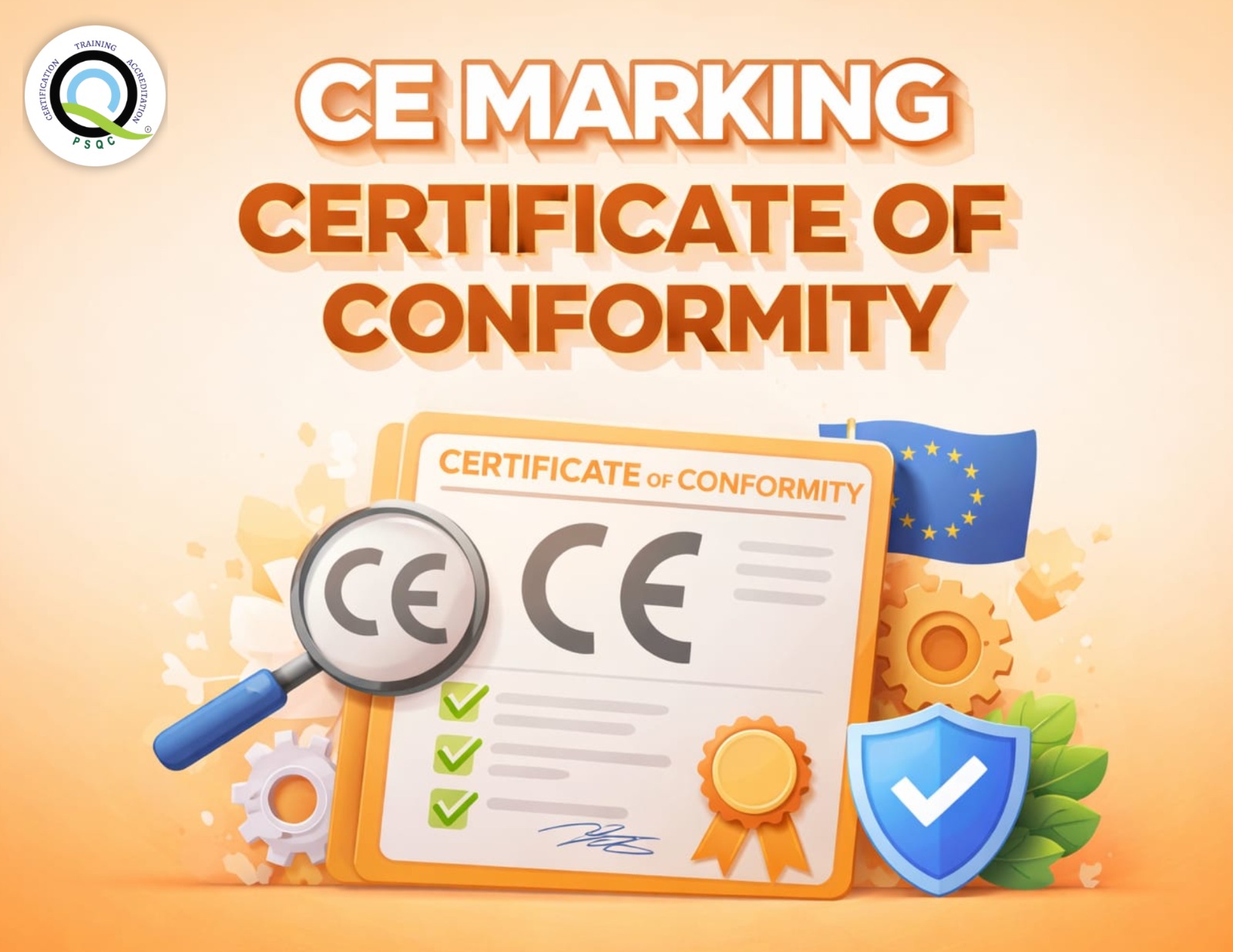
A CE Marking Certificate of Conformity is a document that confirms a product complies with relevant EU regulations.
In many industries, the correct official name is: EU Declaration of Conformity (DoC)
This declaration is a legal document prepared and signed by the manufacturer (or their authorised representative). It states that the product meets all applicable requirements.
In simple terms:
- CE Mark = the symbol on the product
- Certificate / Declaration of Conformity = the proof behind the CE mark
Why Is the CE Certificate of Conformity Important?
A CE marking certificate of conformity is important for several reasons:
1. It Is a Legal Requirement
For CE-regulated products, the certificate is mandatory. Without it, the product is considered non-compliant.
2. It Allows Access to the European Market
Products without proper CE compliance may be rejected by customs or banned from sale.
3. It Builds Trust with Buyers and Procurement Teams
Hospitals, distributors, and institutional buyers often request CE conformity documentation before purchasing.
4. It Protects the Manufacturer and Distributor
If issues arise, CE documentation demonstrates compliance and reduces legal risk.
5. It Supports Product Traceability
The document includes model details, standards, and responsible parties, which supports audits and quality checks.
What Does a CE Marking Certificate of Conformity Include?
A standard CE certificate / EU Declaration of Conformity typically includes:
- Manufacturer name and address
- Product name, model number, and description
- Serial number or batch number (if applicable)
- Applicable EU regulations/directives
- Harmonised standards used (EN standards)
- Notified Body details (if required)
- Signature and designation of responsible person
- Date and place of issue
This document must be available for inspection by authorities.
Who Issues the CE Marking Certificate of Conformity?
This is one of the most searched questions online.
The Manufacturer Issues the Declaration of Conformity
In most cases, the manufacturer prepares and signs the EU Declaration of Conformity.
A Notified Body Issues a Certificate (When Required)
For certain regulated products, a third-party organisation called a Notified Body must assess compliance and issue certification.
Notified Body involvement depends on:
- Product category
- Risk classification
- Applicable EU regulation
CE Marking Certificate of Conformity for Medical Devices (EU MDR):
For medical devices, CE marking is regulated under: EU MDR 2017/745 (Medical Device Regulation)
Medical device CE compliance is more complex because it directly impacts patient safety.
CE marking for medical devices typically requires:
- Quality Management System (ISO 13485)
- Risk Management (ISO 14971)
- Clinical Evaluation
- Performance testing and validation
- Technical documentation (technical file)
- Post-market surveillance plan
Medical Device Classes and CE Requirements
- Class I: Often self-declared (with conditions)
Class IIa / IIb / III: Notified Body certification required
What Is the Difference Between CE Certificate and CE Declaration of Conformity?
Many people use these terms interchangeably, but they are not always the same.
CE Declaration of Conformity (DoC)
- Issued and signed by the manufacturer
- States compliance with EU rules
- Mandatory for CE marking
CE Certificate (Notified Body Certificate)
- Issued by a Notified Body
- Required for higher-risk products
- Confirms assessment and approval
Both documents may be needed depending on the product.
What Happens If a Product Does Not Have CE Conformity Documentation?
Selling CE-regulated products without proper documentation can result in:
- Customs rejection or seizure
- Removal from EU market
- Penalties and legal action
- Distributor blacklisting
- Loss of buyer trust
For distributors and importers, supplying non-compliant products can also create serious liability.
How Long Is a CE Marking Certificate of Conformity Valid?
Validity depends on product type and certification requirements.
Typically:
- Notified Body certificates may be valid for 3–5 years
- The Declaration of Conformity must be updated when:
- product design changes
- regulations change
- standards are updated
- manufacturing process changes
- product design changes
CE compliance is not a one-time process. It must be maintained continuously.
Common Mistakes Companies Make in CE Conformity
Here are common issues that lead to non-compliance:
- Assuming CE marking is just a label
- Missing technical documentation
- Using outdated EU directives
- Not updating the DoC after product changes
- No Notified Body involvement for high-risk products
- Incorrect standards listed in the declaration