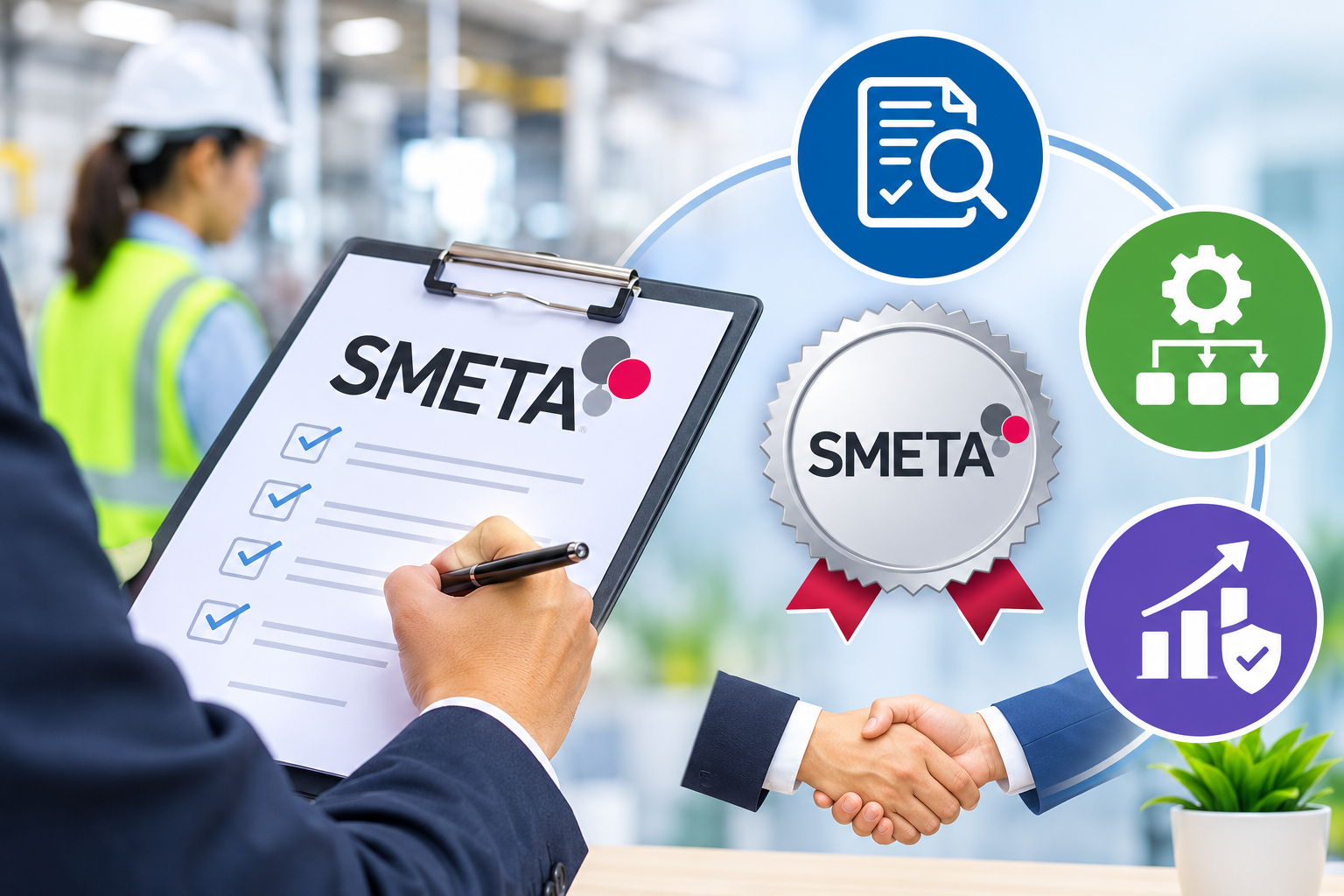
In today’s competitive global business environment, maintaining ethical business practices, workplace safety and social responsibility is essential for organisations. Businesses supplying products to international buyers must demonstrate their commitment to responsible sourcing, employee welfare and environmental management.
A SMETA Audit (Sedex Members Ethical Trade Audit) is one of the widely recognised social audit methodologies used to evaluate working conditions and ethical business practices across supply chains.
SMETA helps organisations identify workplace risks, improve labour standards, strengthen health and safety practices, and demonstrate responsible business operations. For manufacturers, exporters, suppliers and service providers in India, understanding SMETA audit requirements can support better supply chain relationships and business opportunities.
What Is a SMETA Audit?
SMETA stands for Sedex Members Ethical Trade Audit. It is an audit methodology developed by Sedex to assess responsible business practices within organisations and their supply chains.
A SMETA audit evaluates important areas such as labour standards, health and safety, environmental performance and business ethics.
The audit helps businesses identify gaps in their existing practices and implement corrective actions to improve workplace conditions and compliance.
It is important to understand that SMETA is an audit methodology, not a certification. Businesses undergo a SMETA audit and receive an audit report rather than a SMETA certificate.
Why Is SMETA Audit Important for Businesses?
SMETA audits help organisations demonstrate their commitment to ethical operations and responsible sourcing.
Key reasons include:
- Improving employee welfare and workplace conditions.
- Identifying labour-related risks and compliance gaps.
- Strengthening occupational health and safety practices.
- Improving environmental management.
- Supporting transparency in supply chains.
- Building confidence among customers and international buyers.
- Encouraging continuous improvement in business operations.
SMETA Audit Requirements
Organisations preparing for a SMETA audit should review their existing policies, procedures and workplace practices.
Important areas generally include:
1. Labour Standards
Businesses must maintain fair employment practices and protect employee rights. This includes reviewing working hours, wages, employment contracts, forced labour risks, child labour risks and discrimination.
2. Health and Safety
Organisations should maintain a safe and healthy working environment. This includes workplace risk assessments, emergency procedures, fire safety, employee training and suitable protective equipment.
3. Environmental Management
Businesses should evaluate their environmental impact and maintain suitable procedures for waste management, energy consumption, pollution prevention and resource utilisation.
4. Business Ethics
Organisations should maintain ethical business practices, transparent policies and procedures to address bribery, corruption and other unethical activities.
Types of SMETA Audit: 2-Pillar vs 4-Pillar
SMETA audits are commonly conducted using two different audit scopes: 2-Pillar and 4-Pillar.
SMETA 2-Pillar Audit
The 2-Pillar SMETA audit focuses on two primary areas:
- Labour Standards
- Health and Safety
It also includes additional elements such as management systems and an assessment of selected business practices.
This audit scope is useful for organisations that want to evaluate employee welfare and workplace safety.
SMETA 4-Pillar Audit
The 4-Pillar SMETA audit covers all the areas included in the 2-Pillar audit, along with:
- Environmental Assessment
- Business Ethics
It provides a broader assessment of responsible business practices and supply chain management.
SMETA Audit Process: Step-by-Step Guide
Understanding the audit process helps organisations prepare effectively and reduce compliance gaps.
Step 1: Understand the Audit Requirements
Review the applicable SMETA methodology, customer expectations and relevant legal requirements before beginning the audit preparation process.
Step 2: Conduct a Gap Assessment
Evaluate existing workplace policies, employee records, safety practices and environmental procedures to identify areas requiring improvement.
Step 3: Prepare Documentation
Organise relevant documents, including:
- Employee records and employment contracts.
- Wage and attendance records.
- Health and safety policies.
- Risk assessments.
- Training records.
- Environmental policies and records.
- Business ethics policies.
Step 4: Conduct the SMETA Audit
An approved audit firm or qualified audit provider conducts the audit according to the applicable SMETA methodology. The assessment may include document reviews, workplace inspections and confidential employee interviews.
Step 5: Review Audit Findings
The auditor documents findings and identifies areas requiring corrective action.
Step 6: Implement Corrective Actions
The organisation develops and implements corrective action plans to address identified non-compliances and improve its management practices.
Step 7: Review and Continuous Improvement
Businesses should monitor corrective actions and maintain ongoing improvements in workplace conditions and ethical business practices.
SMETA Audit Checklist for Organisations
Before undergoing a SMETA audit, organisations can review the following areas:
Labour Compliance Checklist
- Employment contracts are maintained.
- Working hours and overtime are recorded.
- Wages and benefits are properly documented.
- Child labour and forced labour risks are addressed.
- Discrimination and harassment prevention policies are implemented.
Health and Safety Checklist
- Workplace risk assessments are available.
- Fire safety equipment is maintained.
- Emergency evacuation procedures are documented.
- Employees receive safety training.
- First-aid facilities are available.
Environmental Checklist
- Waste management procedures are implemented.
- Environmental risks are assessed.
- Energy and resource consumption are monitored.
- Pollution prevention measures are maintained.
Business Ethics Checklist
- Anti-bribery and anti-corruption policies are documented.
- Confidential reporting procedures are available.
- Ethical business practices are communicated to employees.
- Conflicts of interest are appropriately managed.
Benefits of SMETA Audit for Indian Businesses
SMETA audits offer several advantages for organisations operating in India and supplying products or services to international markets.
1. Improved Workplace Conditions
The audit helps businesses identify workplace risks and improve employee welfare.
2. Better Supply Chain Transparency
SMETA audit reports can help customers and business partners understand an organisation’s ethical and social compliance practices.
3. Stronger Customer Relationships
Demonstrating responsible business practices can help build trust with international buyers and supply chain partners.
4. Improved Risk Management
Organisations can identify labour, safety, environmental and ethical risks and take appropriate corrective actions.
5. Continuous Business Improvement
The audit encourages organisations to regularly review and improve their workplace policies and management systems.
Documents Required for SMETA Audit
The following documents may be required depending on the organisation’s operations and audit scope:
- Company registration documents.
- Employee details and employment contracts.
- Attendance and overtime records.
- Salary and wage registers.
- Health and safety policies.
- Workplace risk assessments.
- Fire safety and emergency records.
- Employee training records.
- Environmental management records.
- Business ethics and anti-corruption policies.
How to Prepare Your Organisation for a SMETA Audit
Proper preparation helps organisations manage the audit process effectively.
Businesses should begin by reviewing their current policies and procedures. Employee records, salary information, working hours and safety documentation should be properly maintained.
Organisations should also conduct internal workplace inspections, review environmental practices and ensure that employees understand their workplace rights and safety responsibilities.
Corrective actions should be implemented wherever gaps are identified.
SMETA Audit Support from PS Quality Certifications
Preparing for a SMETA audit requires a clear understanding of workplace requirements, ethical business practices and documentation expectations.
PS Quality Certifications can support organisations in understanding audit requirements, reviewing existing documentation, identifying compliance gaps and preparing for the audit process.
Whether your organisation is a manufacturer, supplier, exporter or service provider, proper preparation can help strengthen your ethical business practices and workplace compliance.
Conclusion
A SMETA audit is an important tool for organisations seeking to improve ethical business practices, employee welfare, workplace safety and supply chain transparency.
By understanding SMETA audit requirements and preparing the necessary documentation, businesses can identify compliance gaps and strengthen their responsible business operations.
PS Quality Certifications can help organisations understand SMETA audit preparation and compliance requirements to support continuous improvement.
Frequently Asked Questions (FAQs)
1. What is the full form of SMETA?
SMETA stands for Sedex Members Ethical Trade Audit. It is an audit methodology used to assess ethical and responsible business practices.
2. Is SMETA an audit or a certification?
SMETA is an audit methodology, not a certification. Organisations receive an audit report rather than a SMETA certificate.
3. What is the difference between SMETA 2-Pillar and 4-Pillar audits?
The 2-Pillar audit covers labour standards and health and safety, while the 4-Pillar audit additionally covers environmental assessment and business ethics.
4. Who needs a SMETA audit?
Manufacturers, suppliers, exporters and other organisations that work with buyers requiring ethical trade and supply chain assessments may need a SMETA audit.
5. How long does a SMETA audit take?
The audit duration depends on factors such as the number of employees, business operations, workplace complexity and audit scope.
6. What documents are required for a SMETA audit?
Common documents include employee records, wage registers, attendance records, safety policies, risk assessments, environmental records and business ethics policies.
Leave a Reply